




Loading article...
Loading article...
Stream/Area:
-
Subject:
-
Paper ID:
IJSREM66028
Volume:
10 |
7 |
Jul 2026
Pages:
1-5
Publication Frequency:
Monthly (12 issues per year)

License:International Journal of Scientific Research in Engineering and Management follows the Creative Commons Attribution 4.0 (CC BY 4.0) License, allowing free use and distribution with proper attribution.

Department of science
Smt vidyawati college of education jhansi
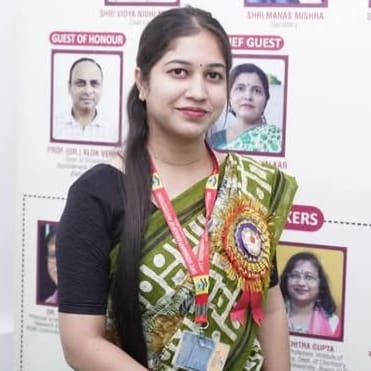
Department of Education
Smt vidyawati college of education jhansi
Department of humanities
SKU Chhatarpur mp india

Department of commerce
Smt vidyawati college of education jhansi
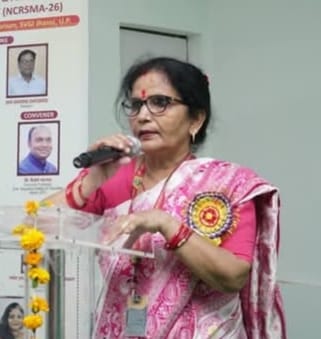
Department of science
Smt vidyawati college of education jhansi
India’s ambitious vision of becoming a developed nation by 2047 (Viksit Bharat) demands a transformative and holistic approach that goes beyond conventional economic models. This paper explores the strategic convergence of Science,creative Arts and Management as a powerful multidisciplinary framework for building a culturally rooted developed India. The study argues that the integration of these three domains is essential for achieving balanced progress that is economically prosperous, technologically advanced, socially inclusive, and culturally vibrant. Drawing upon conceptual analysis and examples from successful global and Indian case studies, this paper examines how scientific innovation guided by sound management principles and enriched by artistic creativity can address critical challenges such as sustainable development, education, healthcare, urbanization, and cultural preservation. The findings suggest that a synergistic Science-Management-Arts nexus can accelerate India’s journey from a developing to a developed nation while ensuring that progress remains deeply rooted in Indian values, ethos, and cultural heritage. The paper concludes by proposing a multidisciplinary framework and policy recommendations for integrating Science, Management, and Creative Arts in national development strategies for Viksit Bharat 2047.
KEYWORDS
India’s vision of becoming a developed nation by 2047 (Viksit Bharat) presents both an unprecedented opportunity and a significant challenge. This study has demonstrated that the Science,creative Arts and Management offers a powerful, holistic, and culturally grounded framework to achieve this ambitious goal. By integrating scientific innovation, efficient management, and creative expression, India can move beyond conventional development models and create a unique path that is modern in capability yet deeply rooted in Indian values and ethos. The convergence of these three streams has the potential to transform key sectors such as education, healthcare, sustainable development, rural empowerment, and cultural preservation. Science provides the knowledge and technology, Management ensures effective implementation and scalability, while Creative Arts bring human-centric design, emotional resonance, and cultural relevance. Together, they foster innovation, strengthen administrative efficiency, and nurture inclusive entrepreneurship — essential elements for building a prosperous and harmonious nation. Higher educational institutions and supportive government policies, particularly the National Education Policy 2020 and NITI Aayog’s Viksit Bharat @2047 vision, will play a decisive role in realising this nexus. By promoting multidisciplinary education, encouraging cross-domain research, and establishing innovation ecosystems, India can prepare a future-ready generation capable of leading the country towards developed nation status. In conclusion, the Science-Management-Creative Arts Nexus is not merely an academic concept but a practical strategy for balanced and sustainable development. If effectively implemented, it can accelerate India’s journey from a developing to a developed nation while ensuring that progress remains inclusive, culturally vibrant, and true to India’s civilizational heritage. The time has come for India to embrace this multidisciplinary approach and lead the world with a development model that is uniquely Indian in spirit and globally competitive in outcome.
1. Florida, R. (2002). *The Rise of the Creative Class: And How It’s Transforming Work, Leisure, Community and Everyday Life*. Basic Books. 2. Sen, A. (1999). *Development as Freedom*. Oxford University Press. 3. Ministry of Education, Government of India. (2020). *National Education Policy 2020*. https://www.education.gov.in/sites/upload_files/mhrd/files/NEP_Final_English_0.pdf 4. NITI Aayog. (2024). *Viksit Bharat @2047: A Vision for Developed India*. 5. UNESCO. (2022). *Re|shaping Cultural Policies: Advancing Creativity for Development*. UNESCO Creative Economy Outlook. 6. World Economic Forum. (2023). *The Future of Jobs Report 2023*. https://www.weforum.org/publications/the-future-of-jobs-report-2023/
Publication Date
7/14/2026
Peer Review Type
Double-Blind Peer Review
Review Rounds: 2
Documents
Article Views
8
Total views since publication
PDF Downloads
8
Total downloads since publication
Geographic Reach
5












Digital Preservation: This article is permanently archived on Zenodo and complies with all data preservation standards across major indexing platforms.
Plagiarism Screening
This manuscript has been checked for plagiarism using TurnitinPlagiarismChecker software.
Conflict of Interest
The authors declare no conflict of interest related to this research work.
Funding Information
No funding information available for this research.
Related research in the same subject area
Loading similar articles...