




Loading article...
Loading article...
Stream/Area:
-
Subject:
-
Paper ID:
IJSREM64981
Volume:
10 |
6 |
Jun 2026
Pages:
1-7
Publication Frequency:
Monthly (12 issues per year)

License:International Journal of Scientific Research in Engineering and Management follows the Creative Commons Attribution 4.0 (CC BY 4.0) License, allowing free use and distribution with proper attribution.
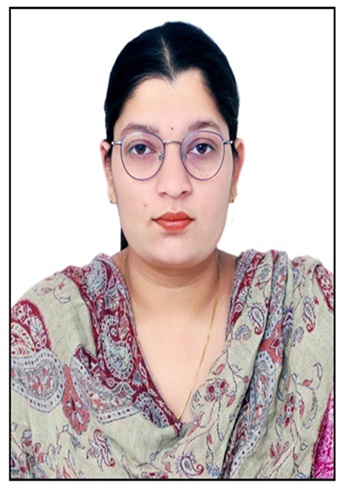
Amity School of liberal Arts
Amity University,Haryana
The set of works written by authors such as Mahasweta Devi, Arundhati Roy, P. Sainath, Vandana Shiva, Rayna Rapp, Betsy Hartmann, Caroline Criado Perez, Nivedita Menon, Angela Davis, Chandra Talpade Mohanty, Rosalind Gill, Radhika Gajjala, Judy Wajcman, Sheryl Sandberg, Sallie Krawcheck, and Melinda Gates constitute an essential intellectual foundation for grasping the recognition, theorization, and presence of the key barriers that confront women in today's world. The writings of these individuals document the emergence of no fewer than nine persistent barriers, namely, structural dispossession, economic precarity, cultural orthodoxy, reproductive control, political exclusion, symbolic erasure, technological marginality, institutional bias, and intersectional discrimination. Early literary and activist scholarship was able to reframe the notion of dispossession, livelihood insecurity, and cultural proscription into structural barriers against the marginalised status of women. The fields of feminist anthropology and biopolitical theory were crucial in exposing the methods used to regulate and exploit women's bodies in society. Later, political and intersectional scholarship brought to light the structural basis of exclusion inherent in governmental forms. In contrast, media and technology scholarship helped explain the nature of the semiotic and computational structures underlying symbolic and technological discrimination. Modern leadership and development writing has further pointed.
KEYWORDS
The intellectual archive considered in this paper spans a broad range, from literary fiction to corporate memoir, from investigative journalism to biopolitical theory, and from ecofeminist philosophy to platform studies. This diversity is not necessarily a flaw; rather, it is a virtue, as it captures the multifaceted nature of the conditions that constrain women's lives across places, times, and axes of social difference. Reading these sources together, this paper suggests that there are nine persistent constraints- structural dispossession, economic insecurity, cultural orthodoxy, reproductive control, political disenfranchisement, symbolic effacement, technological marginalisation, institutional bias, and intersectional discrimination – that constitute an interlocking architecture of marginality. The current period is not an age in which these constraints are being surmounted; rather, it is one in which they are being intensified and reconfigured by digitisation, global warming, and neoliberal governmentality. The issues originally outlined by Mahasweta Devi and Angela Davis are today replicated on an algorithmic scale; the dispossession described by P. Sainath and Vandana Shiva is today exacerbated by ecological devastation caused by climate change; the systemic inequalities analysed by Caroline Criado Perez and Judy Wajcman have been embedded in technological processes that enable us to gain access to jobs, loans, health services, and political discourse. To read the archive from start to finish is not to traverse from issue to resolution; rather, it is to travel from identification to re-identification, from identifying a constraint in one context to its transformation in another. What these narratives have taught us about the process of emancipation is certainly not fatalism, but strategic complexity. What emancipation requires, according to this set of texts, is complex because emancipation is a process, an ongoing struggle that takes place on various fronts. That such strategic complexity should emerge as a political insight in its own right represents no small accomplishment; it took decades of struggles, both scholarly and activist, for feminism to move beyond a single-axis politics. The challenge ahead is to turn that strategic complexity into effective action against the network structure of oppression in the contemporary world.
· Criado Pérez, C. (2019). Invisible women: Exposing data bias in a world designed for men. Chatto & Windus. · Davis, A. Y. (1981). Women, race & class. Random House. · Devi, M. (1997). Breast stories (G. C. Spivak, Trans.). Seagull Books. · Gajjala, R. (2019). Digital diasporas: Labour and affect in gendered Indian digital publics. Rowman & Littlefield. · Gates, M. (2019). The moment of lift: How empowering women changes the world. Flatiron Books. · Gill, R. (2007). Gender and the media. Polity Press. · Hartmann, B. (1995). Reproductive rights and wrongs: The global politics of population control (Rev. ed.). South End Press. · Krawcheck, S. (2017). Own it: The power of women at work. Currency. · Menon, N. (2004). Recovering subversion: Feminist politics beyond the law. Permanent Black. · Mohanty, C. T. (2003). Feminism without borders: Decolonising theory, practising solidarity. Duke University Press. · Rapp, R. (1999). Testing women, testing the fetus: The social impact of amniocentesis in America. Routledge. · Roy, A. (1999). The greater common good. India Book Distributors.
Publication Date
6/14/2026
Peer Review Type
Double-Blind Peer Review
Review Rounds: 2
Documents
Article Views
0
Total views since publication
PDF Downloads
4
Total downloads since publication
Geographic Reach
5












Digital Preservation: This article is permanently archived on Zenodo and complies with all data preservation standards across major indexing platforms.
Plagiarism Screening
This manuscript has been checked for plagiarism using TurnitinPlagiarismChecker software.
Conflict of Interest
The authors declare no conflict of interest related to this research work.
Funding Information
No funding information available for this research.
Related research in the same subject area
Loading similar articles...