




Loading article...
Loading article...
Stream/Area:
-
Subject:
-
Paper ID:
IJSREM66069
Volume:
10 |
7 |
Jul 2026
Pages:
1-16
Publication Frequency:
Monthly (12 issues per year)

License:International Journal of Scientific Research in Engineering and Management follows the Creative Commons Attribution 4.0 (CC BY 4.0) License, allowing free use and distribution with proper attribution.
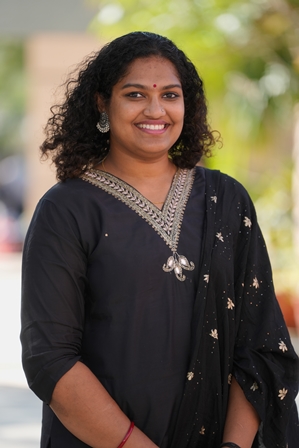
Institute of Journalism & Communication
Sardar Vallabhbhai Global University
School of Liberal studies & Education
Navrachana University
Program Chair of Journalism and Mass Communication Program
School of Liberal Studies & Education Navrachana University
The emergence of the New Wave in Malayalam cinema marks a significant transformation not only in filmmaking practices but also in patterns of audience reception and cultural engagement. Traditionally, Malayalam film spectatorship was shaped by star-centric narratives, linear storytelling structures, and entertainment-oriented consumption. However, the post-2010 cinematic landscape reflects a decisive shift toward interpretive engagement, wherein audiences actively negotiate meaning, realism, and emotional ambiguity. Films such as Maheshinte Prathikaaram, Angamaly Diaries, and Kumbalangi Nights exemplify this transition through their rejection of spectacle in favor of quotidian narratives, morally complex characters, and socio-cultural specificity. Rather than relying on formulaic plot progression, these films foreground silence, subtle performance, and observational realism, thereby demanding heightened cognitive and emotional participation from viewers. Filmmakers like Dileesh Pothan employ narrative minimalism and restrained aesthetics that resonate with global art-house sensibilities while remaining deeply rooted in Kerala’s lived realities. This study argues that the evolution of audience reception is closely linked to rising media literacy, the proliferation of digital film discourse, and the influence of OTT platforms, which have exposed viewers to diverse narrative traditions. The research adopts a qualitative methodology, combining content analysis of selected Malayalam films from the 1990s experimental phase and contemporary New Wave cinema with audience interviews. A purposive sampling method will be employed to select participants who have viewed the chosen films. The paper contends that Malayalam audiences have transitioned from passive spectatorship to interpretive collaboration, transforming cinema into a site of cultural reflection and social learning. By examining this shift, the study positions New Wave Malayalam cinema as a pedagogical force that bridges media education and community consciousness, demonstrating how regional cinema can cultivate critical viewing practices and contribute to broader discourses on identity, modernity, and social transformation.
KEYWORDS
This study set out to examine whether Malayalam New Wave cinema represents merely an aesthetic shift or a deeper transformation in audience reception and cinematic consciousness. Through a combined content analysis of Ozhivudivasathe Kali (2015) and Kumbalangi Nights (2019), and qualitative audience interviews. After applying Stuart Hall’s encoding/decoding model provides additional insight into the diversification of audience readings. Unlike traditional Malayalam cinema, which often encoded dominant moral alignments, both films resist binary characterization. Participants demonstrated dominant, negotiated, and occasionally oppositional readings, especially in relation to masculinity and caste violence. This multiplicity of decoding positions indicates an increasingly reflexive audience capable of engaging with moral ambiguity. The comparative findings suggest that Malayalam New Wave cinema operates as a pedagogical space that trains viewers in interpretive literacy. Ozhivudivasathe Kali represents a high-intensity model of cognitive spectatorship, foregrounding discomfort and demanding critical endurance. Kumbalangi Nights democratizes this mode, integrating ambiguity into emotionally resonant narratives that achieve mainstream acceptance. Together, they illustrate the gradual normalization of participatory spectatorship within Kerala’s media culture. From the interviews with the audience its mostly clear that, audience may have moved ahead and started becoming p[art of interpretation than considering film as an entertainment medium. But start cast and music also play a pivotal part in engaging the audience. Therefore, the study concludes that Malayalam New Wave cinema marks a shift from affective immersion and star-driven moral certainty toward interpretive collaboration and reflective engagement. The spectator is no longer positioned as a recipient of narrative closure but as an active co-author of cinematic meaning. In positioning regional Malayalam cinema within global theoretical debates on reception, this research underscores that shifts in cinematic form are inseparable from shifts in spectatorship. The New Wave is thus not simply a stylistic category but a reconfiguration of cultural consciousness—one that redefines how audiences watch, interpret, and inhabit cinema.
Arya, P. (2023, July). Media Portrayal of Same-Sex Love: A Comparative Analysis between Cinema and OTT Platforms. The Text, 5(2). Babu, A. T. ( 2021, March). When the Real Ceases to Exist: Reading the Realm of the Hyperreal. SMART MOVES JOURNAL IJELLH, 9(3). Baskaran, S. T. (2013). The eye of the serpent: A selection of talks about Tamil cinema. East West Books. Casetti, F. (2015). The Lumière galaxy: Seven key words for the cinema to come. Columbia University Press. Hall, S. (1980). Encoding/decoding. In D. H. Hall S, S. Culture, media, language (pp. 128–138). Hutchinson. Iser, W. (1978). The Act of Reading A THEORY OF AESTHETIC RESPONSE . Johns Hopkins University Press. Jauss., H. (1982). Toward an aesthetic of reception. (Vol. 2). University of Minnesota Press.: Harvester. Jithendran, K. M., & M, A. L. (2023, July 26). THE ROLE OF OTT PLATFORMS IN GLOBALIZING MALAYALAM FILMS. ShodhKosh: Journal of Visual and Performing Arts. doi:10.29121/shodhkosh.v4.i1SE.2023.414 Kumar, R. (. (2023). Media, youth and sociocultural transitions in Malayalam New Wave cinema. ShodhKosh: Journal of Visual and Performing Arts. doi:https://doi.org/10.29121/shodhkosh.v4.i1.2023.5138 Miranda, M. S. (2022). The Games People Play: A Psychological Analysis of Dalit Victimization in Ozhivudivasathe Kali. Contemporary Voice of Dalit. doi:https://doi.org/10.1177/2455328X221082501 MMurthy, S., Pallavi, D. R., Kartha, S. S., & Mittal, S. (2023, June). The Effects of OTT Platforms on Indian Film Industry. REST Journal on Data Analytics and Artificial Intelligence, 2. doi:https://doi.org/10.46632/jdaai/2/2/4
Publication Date
7/15/2026
Peer Review Type
Double-Blind Peer Review
Review Rounds: 2
Documents
Article Views
2
Total views since publication
PDF Downloads
9
Total downloads since publication
Geographic Reach
5












Digital Preservation: This article is permanently archived on Zenodo and complies with all data preservation standards across major indexing platforms.
Plagiarism Screening
This manuscript has been checked for plagiarism using TurnitinPlagiarismChecker software.
Conflict of Interest
The authors declare no conflict of interest related to this research work.
Funding Information
No funding information available for this research.
Related research in the same subject area
Loading similar articles...