




Loading article...
Loading article...
Stream/Area:
-
Subject:
-
Paper ID:
IJSREM66931
Volume:
10 |
8 |
Aug 2026
Pages:
1-15
Publication Frequency:
Monthly (12 issues per year)

License:International Journal of Scientific Research in Engineering and Management follows the Creative Commons Attribution 4.0 (CC BY 4.0) License, allowing free use and distribution with proper attribution.
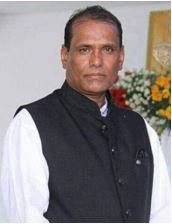
Public Administration, O U
Osmania university
The 1991 balance of payments crisis served as a critical juncture in India’s economic history, forcing the state to abandon its decades-long inward-looking, self-reliant model. This paper examines the subsequent structural transformation of Indian public policy making under the forces of globalization. It argues that the Indian state transitioned from a primary producer and controller of the economy to a market-facilitating and autonomous regulatory entity. Utilizing a qualitative analysis of post-1991 policy shifts, the study highlights how integration with global markets accelerated macroeconomic growth and stimulated unprecedented foreign direct investment (FDI). However, this integration also introduced significant policy constraints. National policy sovereignty became increasingly contingent upon supranational frameworks, fiscal discipline targets, and global credit ratings. Consequently, domestic policy priorities experienced a paradigm shift from universal social welfare to targeted, market-conforming interventions. The paper concludes that while globalisation successfully modernised India's economic infrastructure, it created deep regional and sectoral imbalances, necessitating a critical re-evaluation of the state's contemporary regulatory role.
KEYWORDS
This study concludes that the global shift in Indian policy marks the permanent arrival of aggressive realpolitik and pragmatic transactionalism in New Delhi’s statecraft. The traditional framework of ideological non-alignment has been definitively retired. In its place stands a highly calculated doctrine of Multi-Alignment, designed to navigate and exploit a fragmented, multipolar world. [OLD PARADIGM] [CONTEMPORARY PARADIGM] Passive Ideological Distance ──► Active Multipolar Engagement Moral Posturing in Multilateral ──► Issue-Based Transactional Alliances Defensive Territorial Focus ──► Global Rule-Shaper & Maritime First Responder The "Rupture within Continuity" Paradox Ultimately, the study resolves the foundational research question by characterizing the shift as an evolutionary rupture. The core national objective remains unchanged: preserving absolute sovereignty over domestic and foreign decisions (Strategic Autonomy). However, the execution has experienced a massive structural break. Rather than achieving autonomy by keeping an equal distance from all global superpowers, modern India achieves it by actively engaging with all of them simultaneously—leveraging each relationship to maximize its own national power. Navigating the Late 2020s Order India’s foreign policy framework has successfully proven its resilience during major global shocks, demonstrating that an emerging power can maintain robust parallel ties with competing global actors (such as the US, Russia, and the Middle East). However, as the geopolitical squeeze between the Western alliance system and the China-Russia axis tightens, India’s transactional model will face its ultimate test. Moving forward, India's global status will not be judged by its rhetorical claims as a Vishwa Mitra (global friend), but by its concrete economic output, internal military modernization, and institutional capacity to deliver on its global promises.
1. Primary Sources & Policy Documents · Government of India, Ministry of External Affairs. (2025–2026). Annual Reports and Transcripts of Media Briefings. Ministry of External Affairs Official Archive. · Government of India, Ministry of Commerce and Industry. (2026). Bilateral Trade Performance Matrix FY 2025–26: The Economic Transition. Department of Commerce. [1] · Indian Navy. (2024). Ensuring Secure Seas: Indian Maritime Security Strategy. Integrated Headquarters, Ministry of Defence (Navy). [1] · Jaishankar, S. (2020). The India Way: Strategies for an Uncertain World. HarperCollins Publishers India. [1] · Jaishankar, S. (2024). Why Bharat Matters. Rupa Publications. [1] 2. Books & Scholarly Monographs · Chatterjee, A. (2023). India in the 21st Century: Foreign Policy Perspectives in a Complex World. Atlantic Publishers. · Dutt, V. P. (2021). India's Foreign Policy in a Changing World. Vikas Publishing House. · Malone, D. M., Mohan, C. R., & Ingber, B. (Eds.). (2023). The Oxford Handbook of Indian Foreign Policy. Oxford University Press. · Menon, S. (2021). Choices: Inside the Making of Indian Foreign Policy. Penguin Random House India. · Pant, H. V. (2024). India's Foreign Policy: The Modi Era. Routledge. [1, 2, 3]
Publication Date
8/25/2026
Peer Review Type
Double-Blind Peer Review
Review Rounds: 2
Documents
Article Views
0
Total views since publication
PDF Downloads
1
Total downloads since publication
Geographic Reach
5












Digital Preservation: This article is permanently archived on Zenodo and complies with all data preservation standards across major indexing platforms.
Plagiarism Screening
This manuscript has been checked for plagiarism using TurnitinPlagiarismChecker software.
Conflict of Interest
The authors declare no conflict of interest related to this research work.
Funding Information
No funding information available for this research.
Related research in the same subject area
Loading similar articles...